
Every night at 6 p.m., same horror movie. Fridge door open. Me, staring at the shelves like the chicken breasts were going to suggest something. Spoiler: they never did.
Then the phone. “Easy dinner ideas.” I’d typed it so many times that month my keyboard probably thought it was my name. And by 6:45? Takeout. Another $40, gone. And that gross little feeling of losing to a problem a reasonably organized raccoon could solve.
So last Sunday, I quit. Not cooking — deciding. I handed the whole week to ChatGPT and told it: you figure it out. One prompt. That’s it. That’s the whole plan.
What follows is the honest report. The wins. The flops. The actual receipt math.
What is AI meal planning?
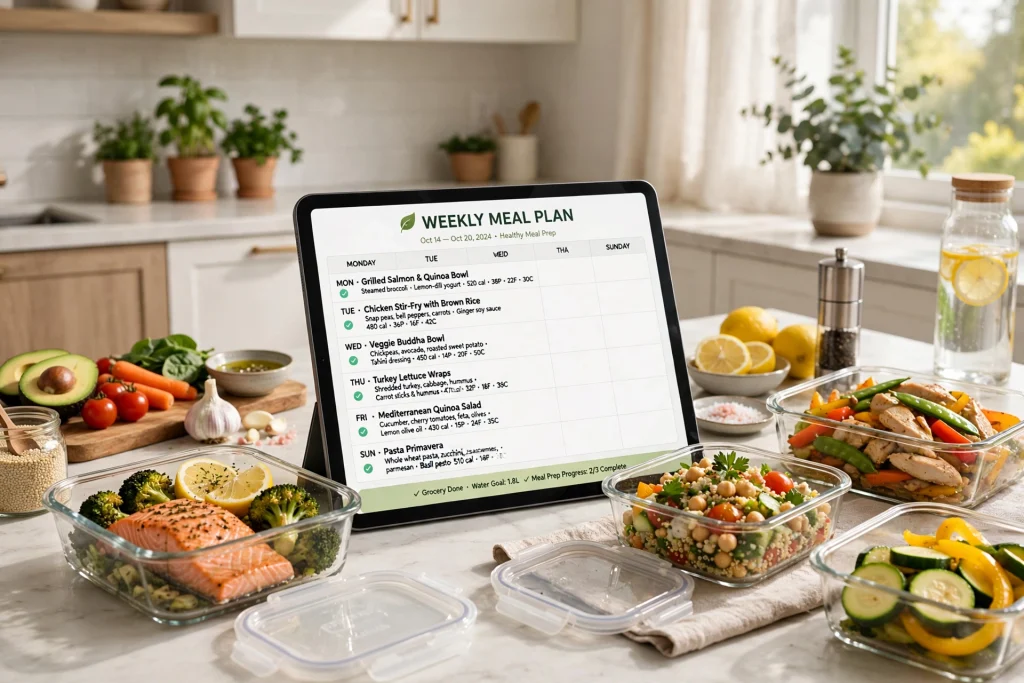
AI meal planning means giving a chatbot your real constraints — budget, stores, dislikes, time limits — and getting back a week of dinners plus an organized grocery list. The trick isn’t the AI; it’s the prompt. Vague requests get fantasy menus; specific constraints get food you’ll actually cook on a tired Tuesday.
Why I stopped trying to decide dinner myself
Okay, real talk? Decision fatigue. It’s a cliché because it’s true.
By dinnertime my brain was DONE. Capital D, done. Eight hours of decisions at work, and then I’m supposed to also be creative about chicken? No. Absolutely not. So we defaulted. Tacos. Pasta. Tacos again. And my personal low point: “cereal counts as dinner, right?” (It does not. My stomach filed a complaint.)
The food waste, though — that was the part that actually stung. Every Sunday I’d buy spinach with big beautiful plans. Every following Sunday I’d throw it out. Slimy. Untouched. A $4 monument to optimism.
The USDA says the average American family wastes something like $1,500 of food a year. Reading that number, I didn’t even flinch. Yeah. That tracks. That was us.
Here’s the thing, though — I’d already made ChatGPT tame my inbox, and weirdly, it was good at it. So I thought: fine. If it can handle my email, it can handle Tuesday. Worst case scenario? One bad week of food, and we go back to tacos. Low stakes. Let’s go.
The prompt matters more than you’d think
My first prompt was embarrassingly lazy. “Plan my dinners for the week.” That’s it. That’s the whole prompt.
What I got back? Pinterest-board nonsense. Quinoa bowls. Salmon with asparagus. Meals for a person with a garden, a farmers market, and — crucially — motivation. I had none of those things.
So I tried again, properly this time. And honestly? This prompt is the whole trick. Steal it:
“Plan 7 weeknight dinners for two adults. Constraints: each meal takes 30 minutes or less, total grocery budget around $90, and we shop at Walmart and Trader Joe’s. One of us hates mushrooms, the other won’t eat cilantro. Prefer one-pot or sheet-pan meals, minimal cleanup. Include a grocery list organized by store section, and reuse ingredients across meals so nothing goes to waste. We’re decent home cooks but lazy on weeknights.”
See the difference? Budget. Real stores. Real dislikes. Cleanup limits. That’s what turns a fantasy menu into food you’ll actually make on a Tuesday when you’re tired and the couch is right there.
What it got right (more than I expected)
Credit where it’s due — four of the seven meals were genuinely good. Not “good for AI” good. Actually good.
The lineup: a sheet-pan sausage and veggie bake. Chicken fried rice that finally gave my sad container of day-old rice a reason to exist. Black bean quesadillas with a lime crema — five minutes of work, tasted like thirty. And a one-pot creamy tomato pasta that my partner has now requested twice. Twice! If you knew my partner’s standards, you’d understand what a big deal that is.
But can I be honest? The meals weren’t even the best part. The grocery list was.
Everything grouped by store section. Produce, meat, dairy, pantry — boom, boom, boom. Little notes on stuff I probably already had at home (it was right, mostly). And the thing that genuinely impressed me: it reused ingredients on purpose. Monday’s sausage bake used bell peppers. Wednesday’s fried rice used the same bell peppers. Nothing sat in the fridge slowly becoming a science fair project.
That alone? Probably saved me $15–20 versus my usual “wander the aisles buying random stuff” method.
Oh, and it estimated the cost per meal. Within about 10% of what I actually paid at Walmart. Not perfect. But close enough to actually plan around, which — let’s be real — is more than my old system ever did.
Where it fell apart
Two duds out of seven. I’m not going to gloss over them, because the flops are the useful part.
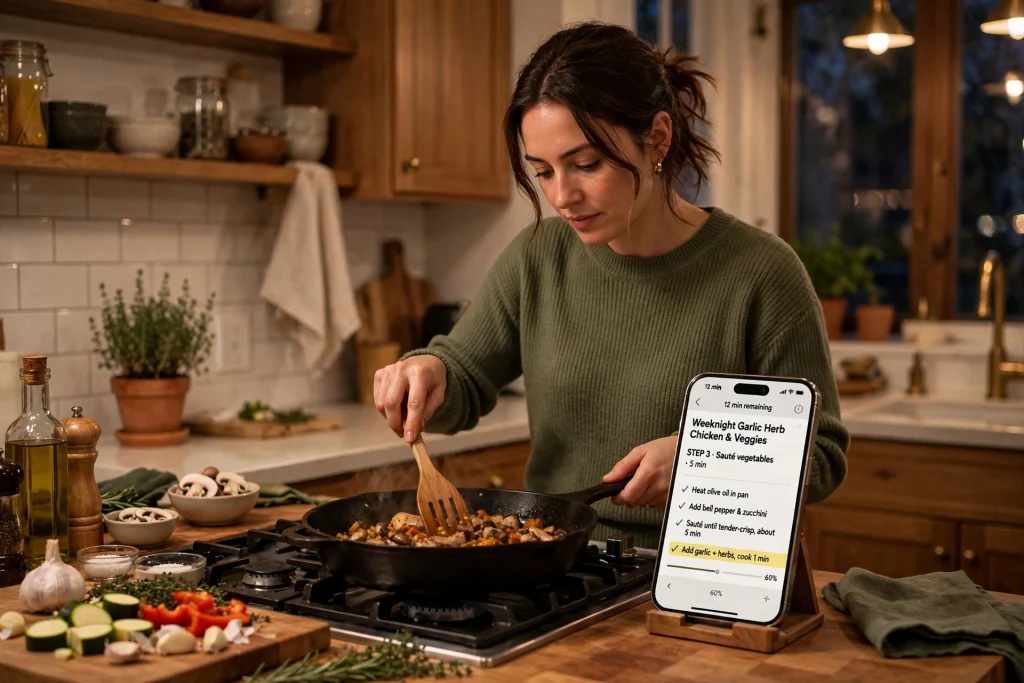
Thursday. “15-minute lemon garlic shrimp pasta.” It took 35 minutes. Thirty-five! Because — and this is apparently news to ChatGPT — peeling shrimp takes time. Boiling water takes time. And the five minutes I spent digging through a drawer for the garlic press? Also time! Who knew.
New rule, carved in stone: whatever time estimate it gives you, add 10–15 minutes for a normal human kitchen. A kitchen where the garlic press is never where you left it.
Friday was the expensive one. “Mediterranean grain bowl.” Sounds great, right? Then I read the ingredient list: harissa paste. Za’atar. Preserved lemon. Three specialty items — about $14 total — for ONE meal. Stuff that is now going to live in my pantry until I die or move, whichever comes first.
My fault, honestly. I should’ve added “nothing I’ll only use once” to the prompt. Lesson learned. The expensive way, as usual.
One more small thing — it kept pushing fresh herbs. And look, I love fresh basil as much as the next person. But a $3 clamshell that turns to black sludge in 48 hours? That’s not budget cooking, that’s a donation to the compost gods. I used the dried herbs I already owned. Nobody noticed. Nobody ever notices.
The receipt math (the part you actually care about)
Alright. Numbers.
Before: $130–150 a week on groceries. Plus two, sometimes three takeout orders at $35–45 each. So roughly $220 a week for two people. And we STILL threw food away. Writing that down physically hurt.
This week: $94. At Walmart and Trader Joe’s combined. Takeout orders: zero. Food waste: basically none.
Even if you want to be cynical about it — “oh, first-week novelty, you were trying harder” — fine. Round it up, call it luck, whatever. That’s still around $100 back in my pocket for one week of letting a chatbot do the thinking.
Now stretch that over a month. $300–400. That’s… that’s a car payment. That’s a weekend trip somewhere. All from answering the single most boring question of the day without using my own brain cells.
How to steal this for your own kitchen
Want to try it? Here’s what actually mattered — the difference between my garbage first prompt and the one that worked.
Be brutally specific. I mean it. Budget, store names, the foods your people refuse to eat, real time limits, your actual skill level, your actual equipment. (No, I do not own a Dutch oven. Stop suggesting recipes that need one. I see you, ChatGPT.) The more real-world detail goes in, the less fantasy nonsense comes out. Garbage in, quinoa bowl out.
Make it reuse ingredients. This — THIS — is the money saver. One sentence in your prompt: “design meals around shared ingredients so nothing goes to waste.” That’s it. Say goodbye to the slimy spinach forever.
Get the list organized by store section. I know, it sounds minor. But it turned my usual hour of wandering Walmart into 25 minutes flat. And here’s the sneaky benefit: less time in the store means fewer impulse buys. Which, let’s be honest with each other, is where the real money was leaking out. It was never the groceries. It was the “ooh, cookies” at aisle seven.
Ban single-use ingredients. Add this line: “no ingredient should appear in only one meal.” Your pantry stays sane. Your wallet stays fuller. Everybody wins.
And here’s my favorite part: it’s free. The free version of ChatGPT did all of this. No subscription, no upgrade, nothing. If you want to see what else the free tier can pull off, these free AI tools genuinely compete with the paid ones.
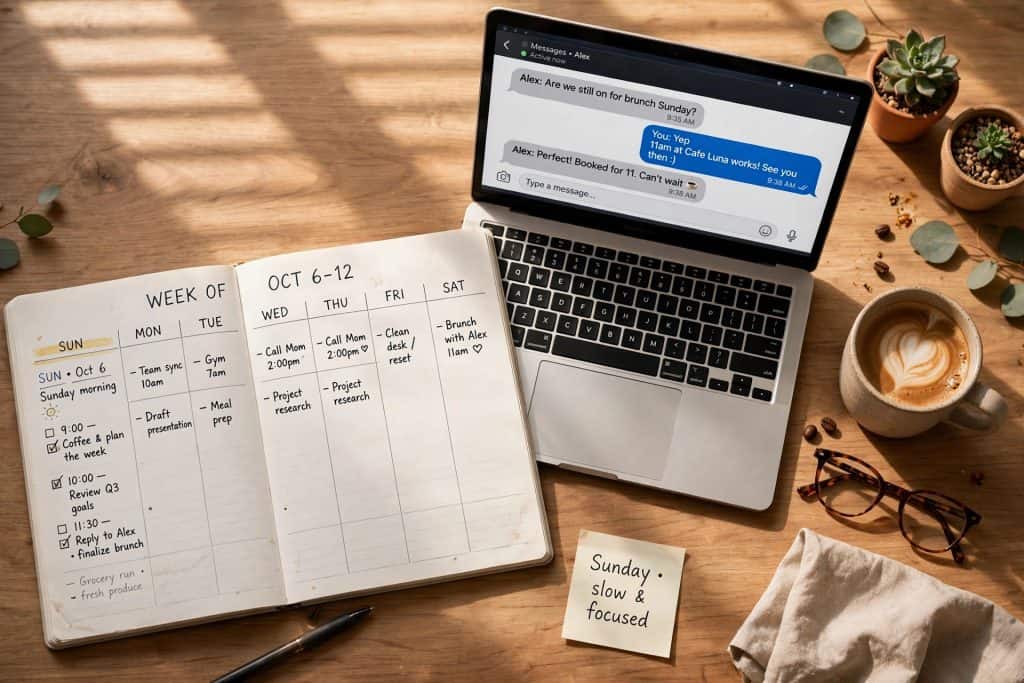
Last tip, and it’s a good one: save the prompt that works. Mine’s in my notes app now — a little “meal plan” template. Every Sunday: coffee, tweak the cuisine, adjust the budget, done. Five minutes. The whole week, planned. It’s my full Sunday planning routine now.
Frequently Asked Questions
No. The free version did everything in this post — the full week, the grocery list, the cost estimates. No subscription needed.
That’s exactly what the prompt is for. List every dislike and restriction explicitly (“one of us hates mushrooms”) — the more specific, the better the plan.
Within about 10% of actual Walmart prices in my test. Good enough to plan around, not good enough for accounting.
Name your actual stores in the prompt (Walmart, Trader Joe’s, whatever you use). It tailors the list and the budget to real shelves.
Would I do it again?
Yeah. I mean — I already have. We’re three weeks in.
It’s a whole Sunday thing now. Coffee. Tweak the prompt. Get the plan. One grocery run. Very civilized. The novelty wore off around week two, by the way. You know what didn’t wear off? The savings.
Perfect? No. Come on. About one meal a week still needs me to step in and fix something, and I will never — NEVER — trust its time estimates again without padding them. Fool me once, etc.
But compare it to the old system. The 6 p.m. fridge stare. The slimy spinach funerals. The $40 regret-takeout. It’s not even close.
People love talking about AI like it’s only for resumes and code. Sure. But sometimes the most useful thing it can do is answer the most boring question of your entire day.
What’s for dinner?
Save hours every week with AI
One practical tip every Tuesday — the AI tools, prompts, and workflows that actually save you time. Free, no fluff.
No spam. Unsubscribe anytime.

Pingback: ChatGPT Travel Planning: 7 Prompts for a Better Trip