I paid $58 a month for a gym membership I used four times. Four. Times.
That’s $174 per workout if you’re doing the depressing math. I am. I did.
The problem wasn’t laziness — okay, it was partly laziness — but mostly it was the wandering. I’d walk in, drift between machines like a tourist, do whatever looked easy, and leave after 25 minutes feeling like I’d accomplished nothing. What I actually needed was a plan. What I got was a $58 monthly reminder that I didn’t have one.
So last month I tried something embarrassingly simple: I asked ChatGPT to build me an AI workout plan. Not a generic “do pushups” template — one built around my actual life. My cranky left knee. My apartment with thin walls and no room for jumping around. My realistic 30 minutes, three times a week. And honestly? It’s the first fitness routine that’s stuck for me in years.
What is an AI workout plan? An AI workout plan is a personalized exercise routine created by an AI assistant — like ChatGPT, Claude, or Gemini — based on your fitness level, equipment, schedule, injuries, and goals. You describe your situation in plain English, and it builds a week-by-week workout schedule you can ask it to adjust as you progress.
TL;DR: I gave ChatGPT five specific prompts about my knee, my equipment, and my 30-minute windows — and it built an AI workout plan I actually follow. The trick isn’t the AI; it’s the details you feed it. Start with your honest constraints, plan around your real schedule, and ask it to adjust the plan every two weeks as you get stronger.
Here’s the thing nobody tells you: generic plans fail because they’re built for a person who doesn’t exist. You know the type — “just wake up at 5 AM and hit the gym for 90 minutes.” Cool. I have a job and a body that complains when it rains. The magic of asking an AI is that it doesn’t judge your constraints. It just works around them.
The prompt that changed everything
My first attempt was useless. I typed “make me a workout plan” and got a beautiful, detailed, completely fictional routine involving a squat rack I don’t own and 75 minutes I don’t have. Classic.
The fix was one ugly, honest paragraph. Here’s the template that actually works — copy it and fill in your own details:
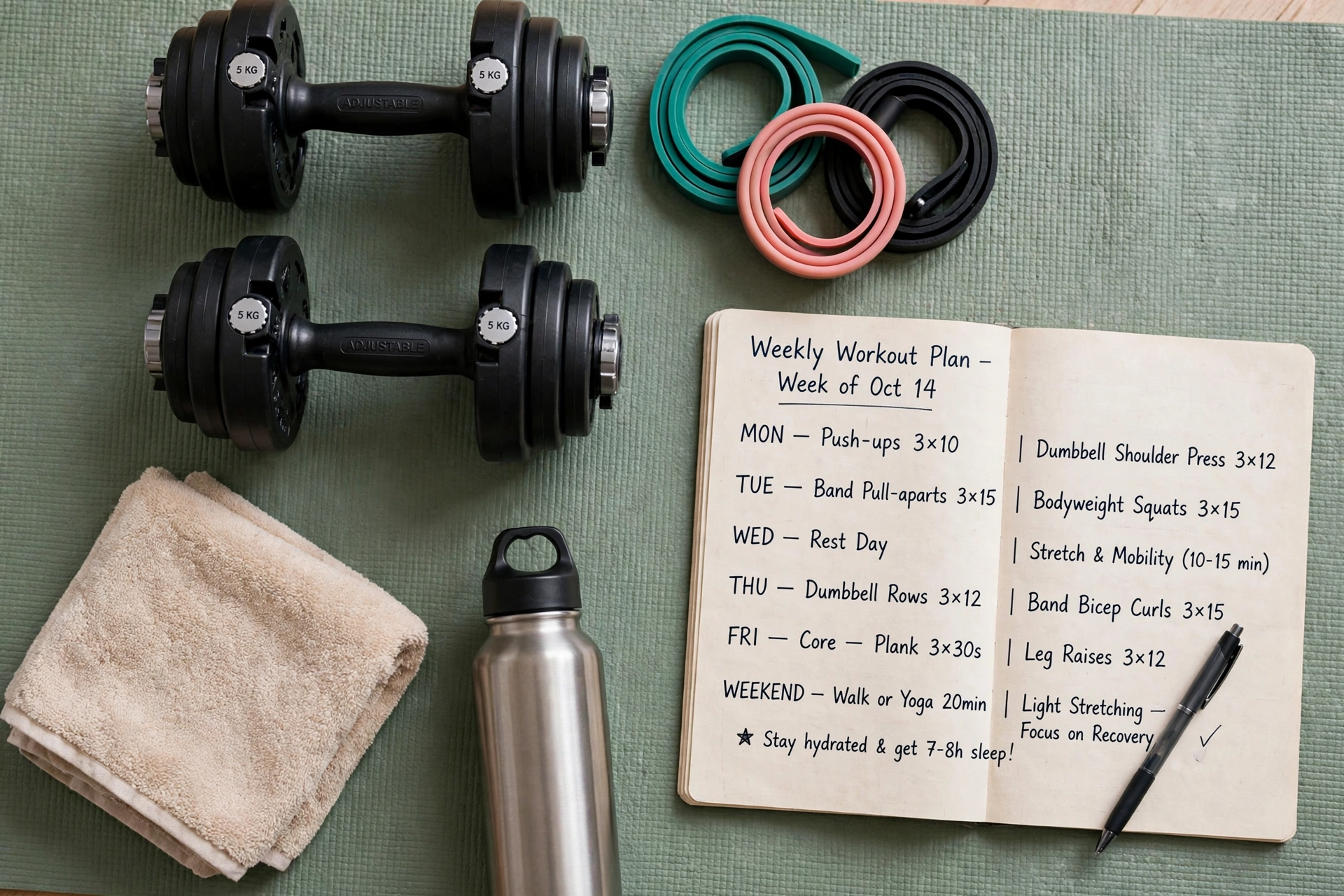
“Act as my personal trainer. I’m 34, I haven’t exercised regularly in 2 years, and I have a sore left knee that hates lunges. I have two adjustable dumbbells and a resistance band at home. I can work out Monday, Wednesday, and Friday for 30 minutes before work. I want to build strength and lose about 15 pounds. Build me a 4-week plan with specific exercises, sets, and reps. Keep it beginner-friendly and avoid anything high-impact.”
See the difference? The AI finally had something to work with. My plan came back with dumbbell rows, goblet squats (knee-friendly depth), band pull-aparts, and marching in place for warmups. Nothing fancy. Nothing I couldn’t do in my living room.
2. The equipment reality check
This one saves you from the classic trap: an AI assumes you own things. After your first plan, paste this:
“Here’s what I actually own: [your list]. Remove anything that needs equipment I don’t have, and replace those exercises with the closest alternative using what I own. Don’t suggest I buy anything.”
My first plan had me doing “lat pulldowns” and “leg presses.” My apartment has a couch. This prompt fixed all of that in one shot.
3. The schedule-fit follow-up
Life happens. When my Wednesdays turned into chaos, I used:
“I can only work out twice this week instead of three. Rebuild this week’s sessions into two 35-minute full-body workouts using the same exercises.”
This is where an AI workout plan beats a PDF from 2019 — it adapts on the spot instead of making you feel guilty for falling behind. The same week I figured that out, I built a whole weekly plan in 20 minutes for everything else on my plate, too.
4. The “am I doing this right?” check
This one’s underrated. Before trying a new exercise, I paste:
“Explain how to do a Romanian deadlift like I’m a total beginner. What are the 3 most common mistakes, and how do I know my form is right without a mirror?”
Is it as good as a real trainer watching you? No. Not even close, and I’d never claim that. But it’s miles better than the 14-second TikTok clip I used to learn from. The mistake lists have genuinely saved my lower back.
5. The two-week progression prompt
Every two weeks, I paste:
“It’s been two weeks on this plan. The workouts feel easy now except push-ups, which still kill me. Update the plan for weeks 3-4: make everything a bit harder except push-ups, where I need an easier variation.”
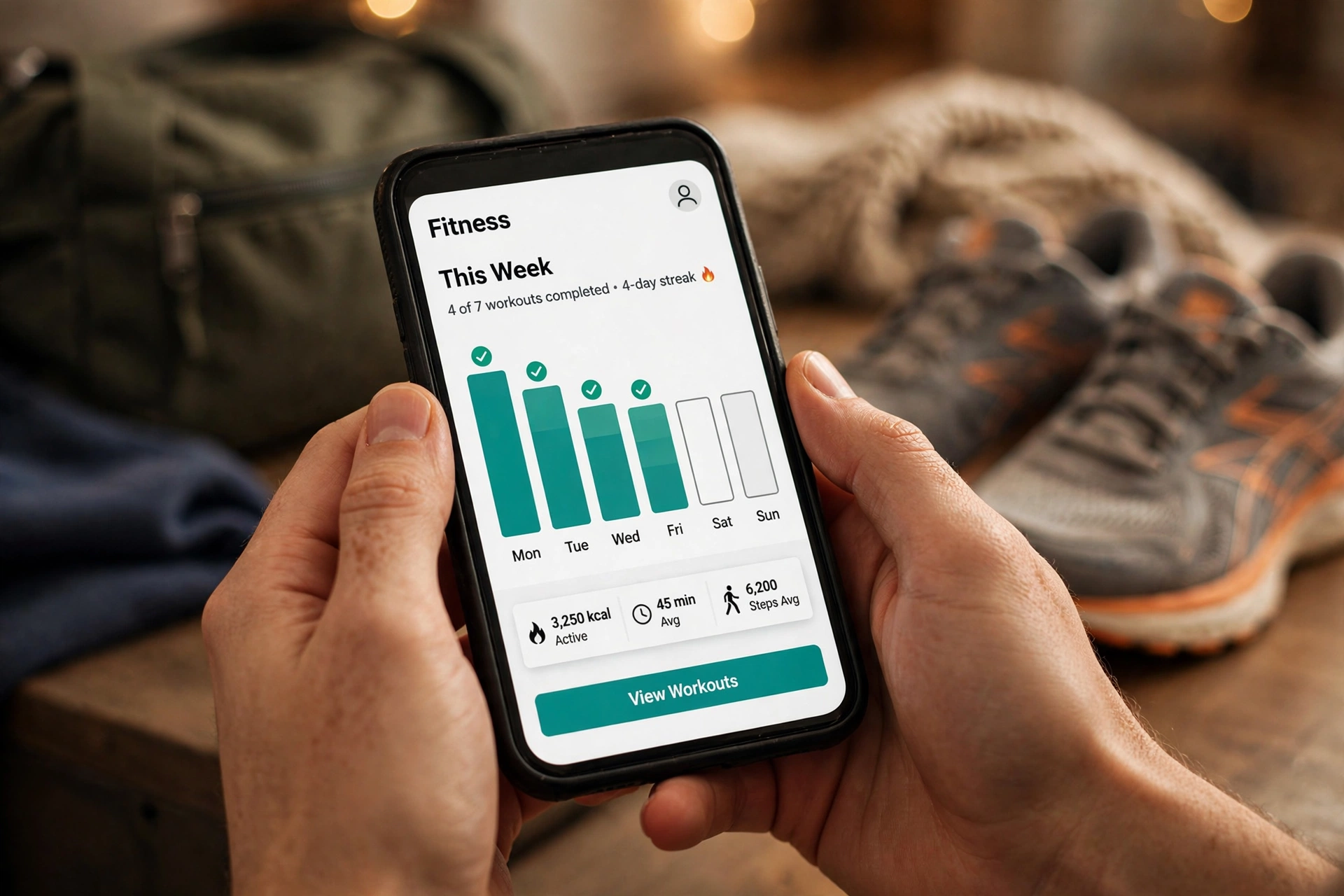
Progression is where most home routines die. You do the same thing for a month, it stops working, you quit. This prompt keeps the plan alive — and if you track the habit in a simple app alongside it, you’ll actually watch the streak build.
How the options stack up for a beginner
| Option | Typical cost | Best for |
|---|---|---|
| Gym membership | ~$50-60/month | People who need the atmosphere to show up |
| Home gear + AI plan | ~$100-200 one-time | Apartment dwellers with 30 spare minutes |
| Running + AI plan | Free | Anyone with decent knees and a sidewalk |
If the gym-membership row stings a little, it’s worth one honest evening to track what you’re actually spending across all your subscriptions — mine added up faster than I expected.
What AI gets wrong (the honest part)
I want to be straight with you: this isn’t a personal trainer. ChatGPT doesn’t know what you look like, can’t see your form, and occasionally suggests things that are just… off. Mine once told me to do box jumps with my bad knee. I have questions about that one.
Also, the CDC reports that only about 24% of American adults meet both the aerobic and muscle-strengthening guidelines — and an AI plan is only as good as your willingness to open the app. The plan doesn’t do the push-ups. I wish it did.
And a real caveat: if you have an actual injury, a heart condition, or you’re pregnant, talk to a real human professional first. An AI can’t clear you for exercise. This stuff is for generally healthy people who just need structure.
One more thing that surprised me: pairing the workouts with a simple meal routine made everything click faster. I ran my ChatGPT dinner-planning experiment too — nothing extreme, just weeknight meals that didn’t undo the workouts. If you’re going to do the fitness half, the food half is worth ten minutes a week.
Your questions, answered
They work about as well as any plan you follow — which is the whole point. The American College of Sports Medicine recommends at least 150 minutes of moderate activity per week, and an AI plan makes it easier to hit that by fitting workouts to your actual schedule. The plan is only 20% of it; showing up is the other 80%.
For beginners who need structure, surprisingly decent. For form correction, injury rehab, or serious athletic goals, no — a human trainer who can watch you move is worth every dollar. Think of AI as a free starting point, not a finishing school.
Four things: your fitness level and any injuries, the equipment you actually own, your real schedule (days and minutes), and your goal. The more specific you are, the less generic the plan. Vague input gets you a vague plan — that’s the one rule.
For generally healthy adults doing basic strength and cardio work, the exercises AI suggests are standard and well-established. But AI can make mistakes — it once suggested box jumps for my bad knee. Use common sense, stop if something hurts, and check with a doctor or trainer if you have any health concerns.
The bottom line
I’m six weeks in now. I haven’t missed a session in three weeks, which is a personal record I’m weirdly proud of. My knee feels better than it has in a year — turns out consistent, boring, knee-friendly strength work beats heroic gym sessions I never do.
The AI didn’t make me fit. It just removed the one excuse I kept hiding behind: “I don’t know what to do.” Now I know exactly what to do, three mornings a week, in my living room, in 30 minutes. The rest is just showing up.
Start with the honest prompt. Fill in your real details — the ugly ones, the knee, the couch, the 30 minutes. That’s the whole secret.
Save hours every week with AI
One practical tip every Tuesday — the AI tools, prompts, and workflows that actually save you time. Free, no fluff.
No spam. Unsubscribe anytime.